A lot of Whistler's best homes were built between 1985 and 2005 — log homes, mountain chalets, post-and-beam builds. They have bones. They have views. They also have varnished log walls, dated kitchens, and bathrooms that never worked. Renovating these homes is its own discipline. It's not a new build with old plumbing; it's a conversation between what the house already is and what it needs to become. We've been having that conversation for nine years.
Why log homes need a different kind of designer
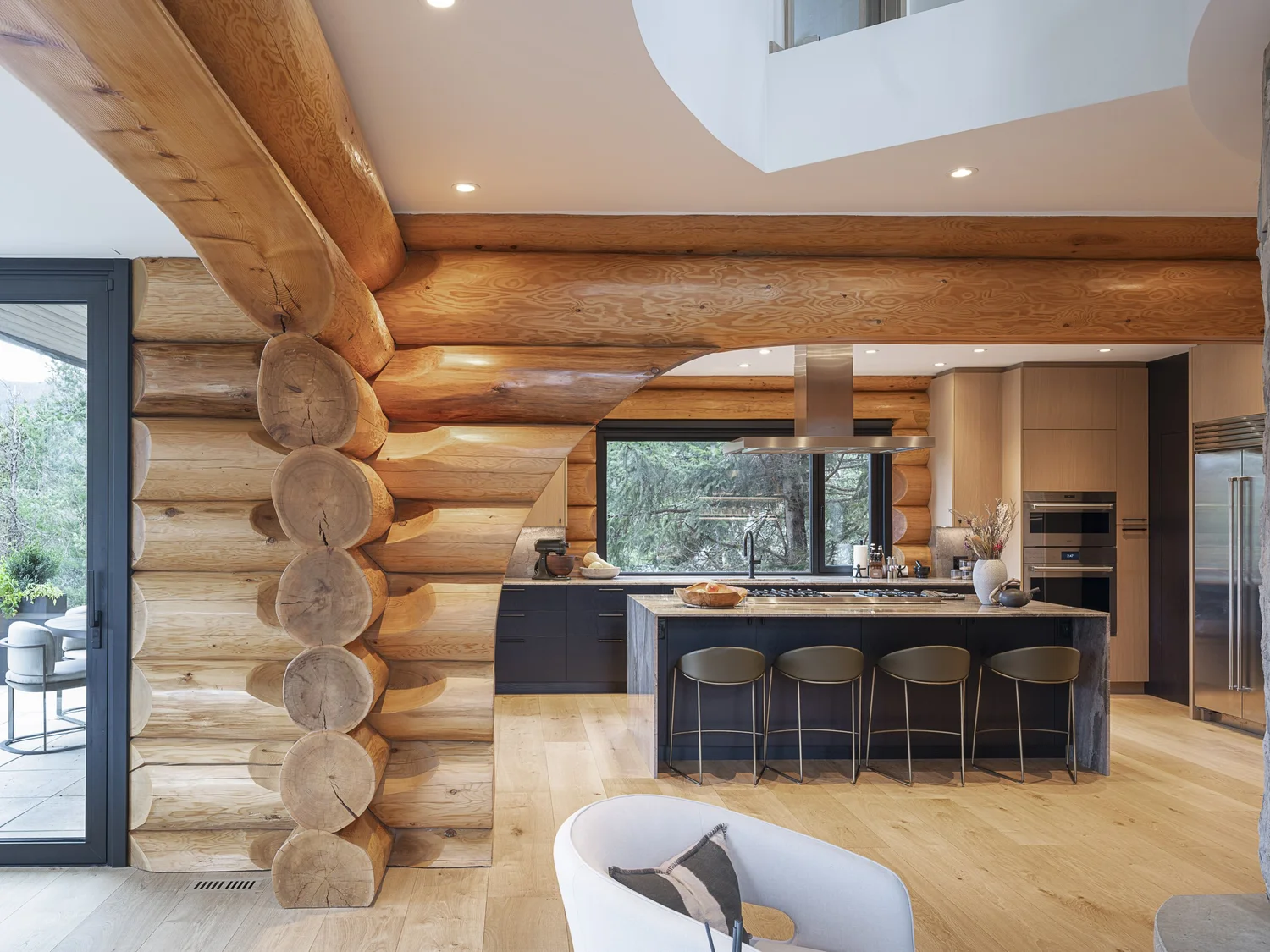
A log home is not a drywall box you can re-skin. The timber is load-bearing and it is the aesthetic. Any move you make has to respect the logs — either by leaning into them or by finding an honest way to quiet them down. Most generic designers default to white-washing the logs, which erases the soul of the house and produces a space that feels like a hotel lobby. We don't do that. We read what's there and figure out what wants to stay.
What stays, what goes
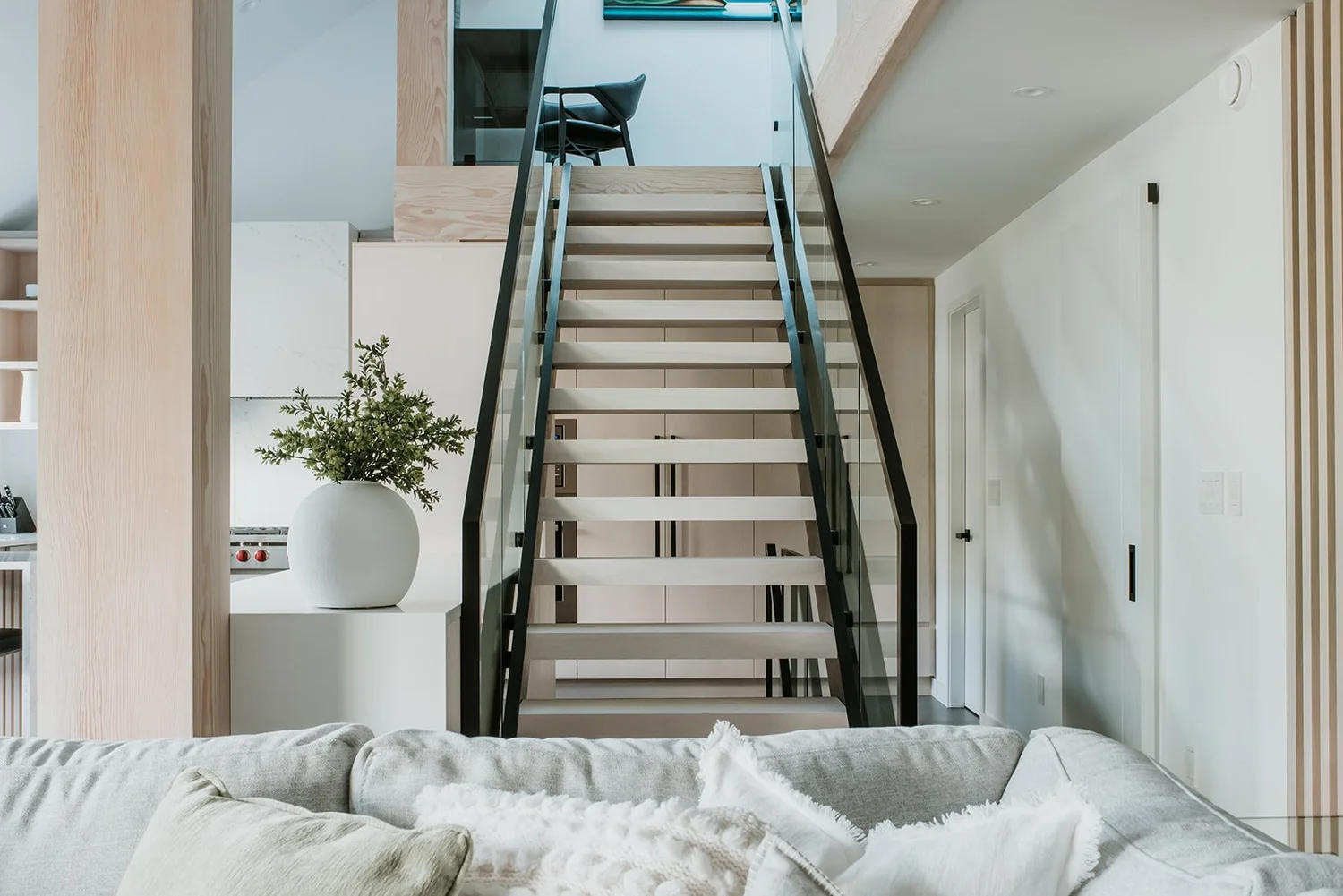
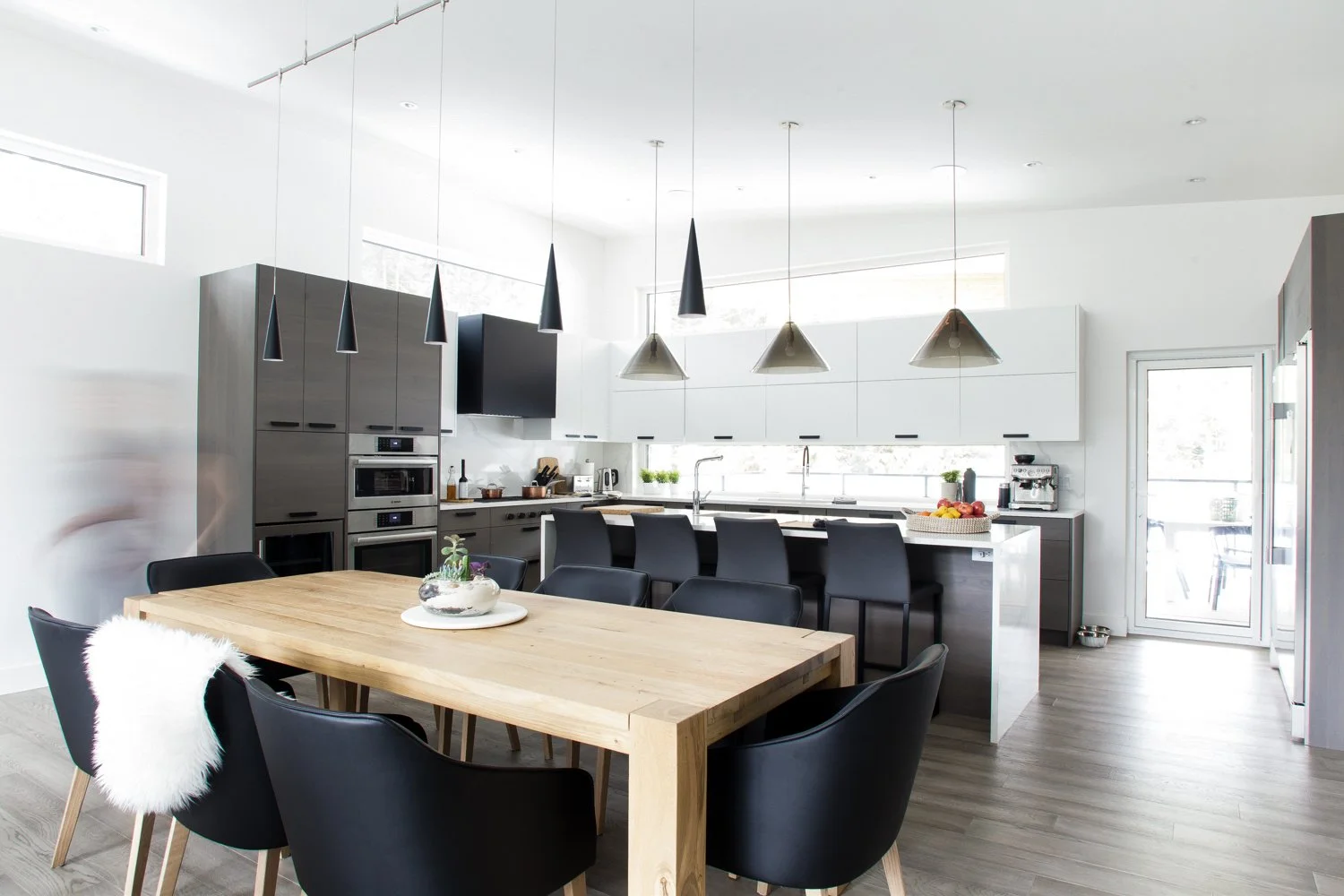
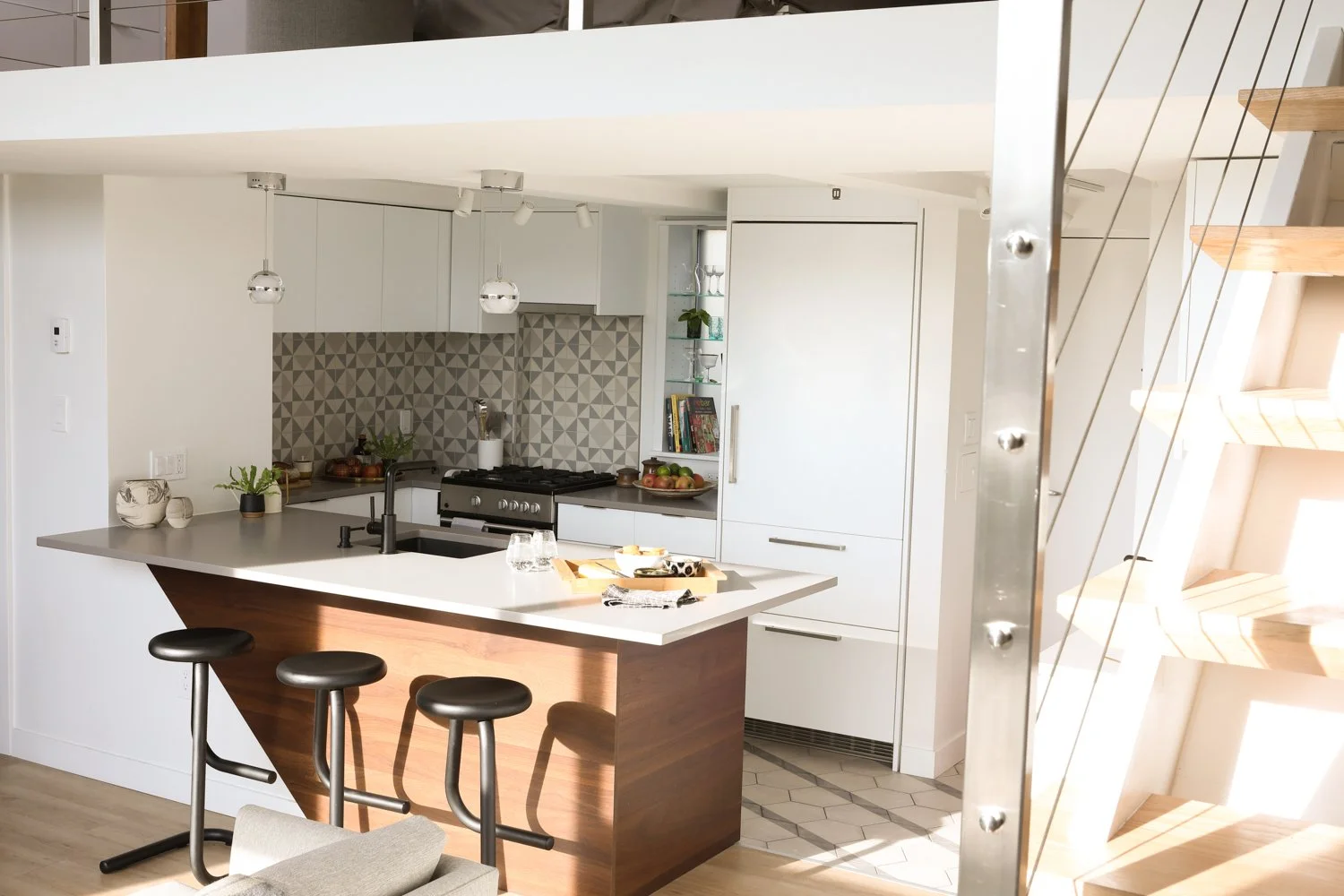
Our Sunridge renovation is a working example. The log walls stayed. The original staircase went — replaced by a curved, sculptural stair that reads as a new gesture in conversation with the old timber. The stone tower stayed and got lit differently. The kitchen came out entirely and was rebuilt around open shelving integrated into the log wall, so the new work felt attached, not applied.
Five decisions that usually make the difference
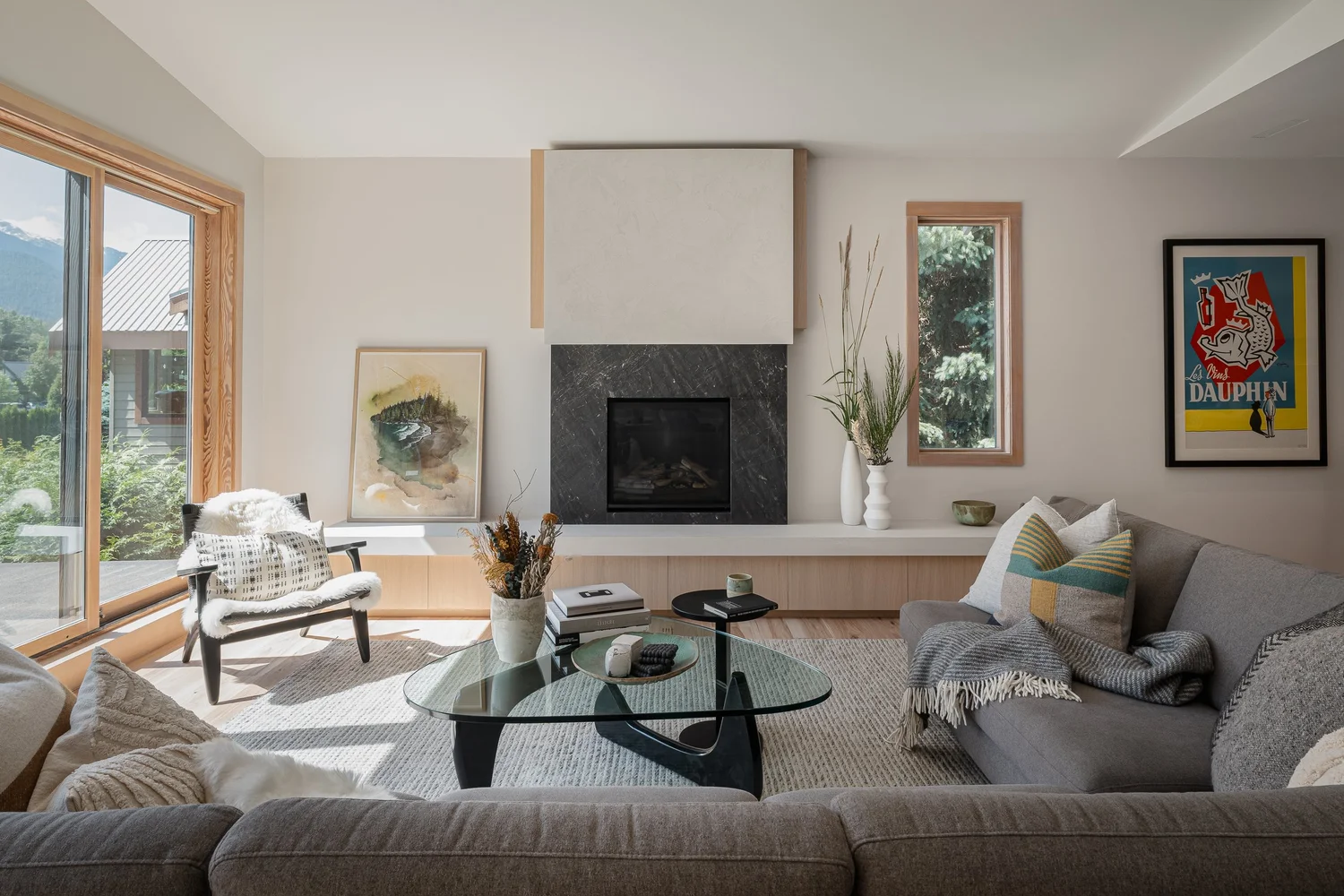
Read the existing timber honestly. Some logs want to be seen; some want to be quieted with a wash that doesn't kill the grain. Stone that belongs to the site. Local granite and basalt, not imported marble. Oak to ground the new work. Where new millwork meets old log, oak bridges the two without competing. Soft fabric as the quiet move. Wool, linen, sheepskin — texture absorbs the visual weight of log walls. Lighting that respects log. No downlights drilled into exposed beams. Sconces, pendants, and uplight that let the logs be part of the composition.
What we don't do
No white-washing the heart. No forcing farmhouse on a mountain house. No replacing authentic old-growth logs with "rustic" new-cut timber. No ripping out a working stone fireplace because it isn't the trend of the year. Legacy renovation is an act of respect for what the previous owners built — and an act of confidence in what the next chapter can be.
Work that shows the thinking.
Common questions.
We bought a 1990s Whistler home — is it worth renovating or should we tear down?
Do you work with log home contractors?
How long does a legacy renovation take?
Can we stay in the house during the renovation?
Let’s talk about how your family lives.
Every project starts with a conversation about who you are and how you actually live.