Mountain Modern is not a look. It is a response to place — to alpine light, to cedar forests, to the particular way a long valley holds snow. When a home in the Sea-to-Sky gets this right, it reads quietly. When it gets it wrong, it reads like a Pinterest collage. Our work sits in the first camp, and we have nine years of evidence for why.
What Mountain Modern actually means in 2026
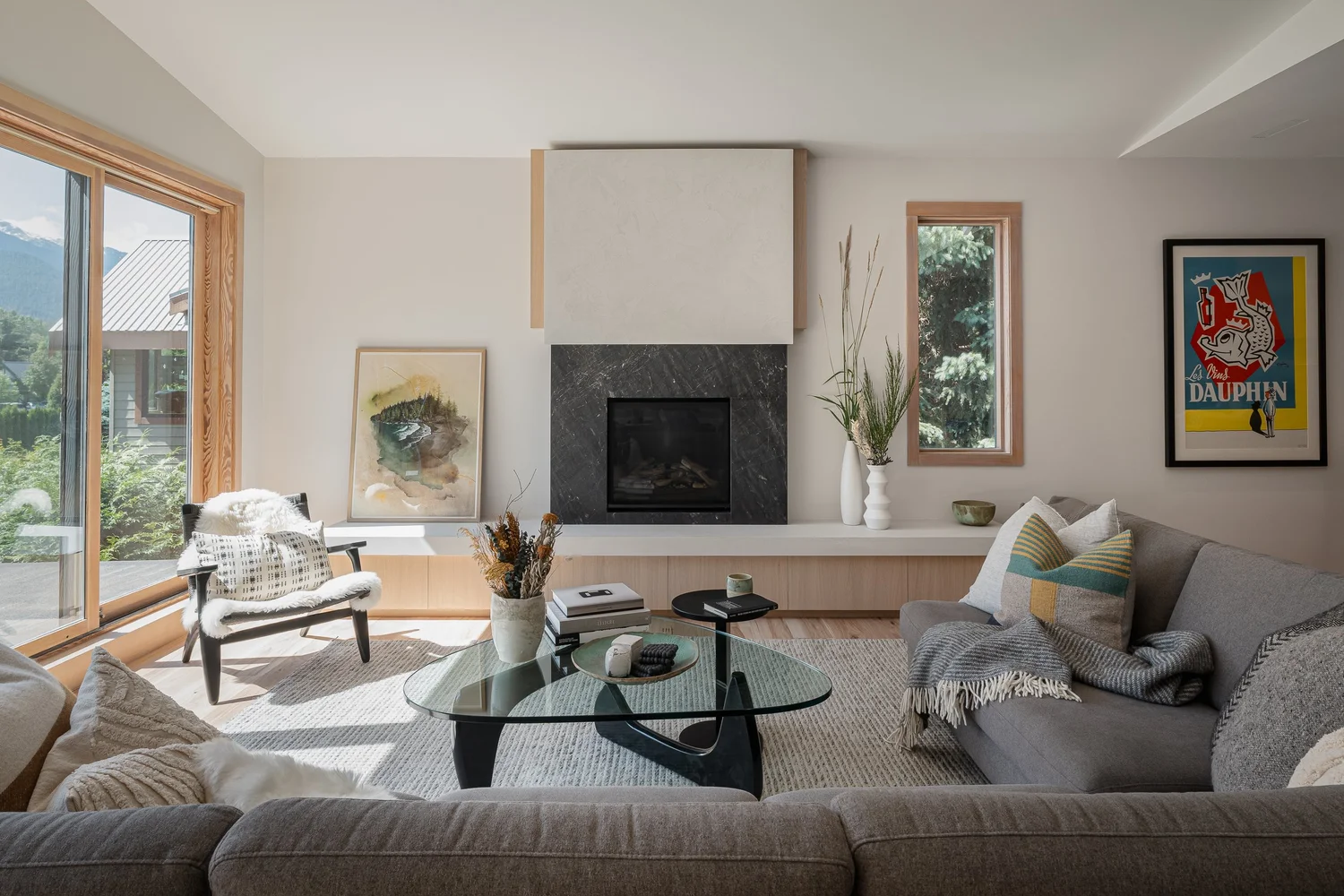
Mountain Modern in its current form is the inheritor of three conversations: the West Coast Modern movement of Erickson, Thom, and Downs; the Pacific Northwest material tradition of cedar, stone, and exposed timber; and the 2026 quiet-luxury macro shift that has moved the whole industry away from cold minimalism toward warmer, more intentional rooms. The result, done well, is a home that feels deeply of its place — restrained, tactile, layered — without any of the "mountain chalet" clichés that the term used to imply.
The five principles we design around
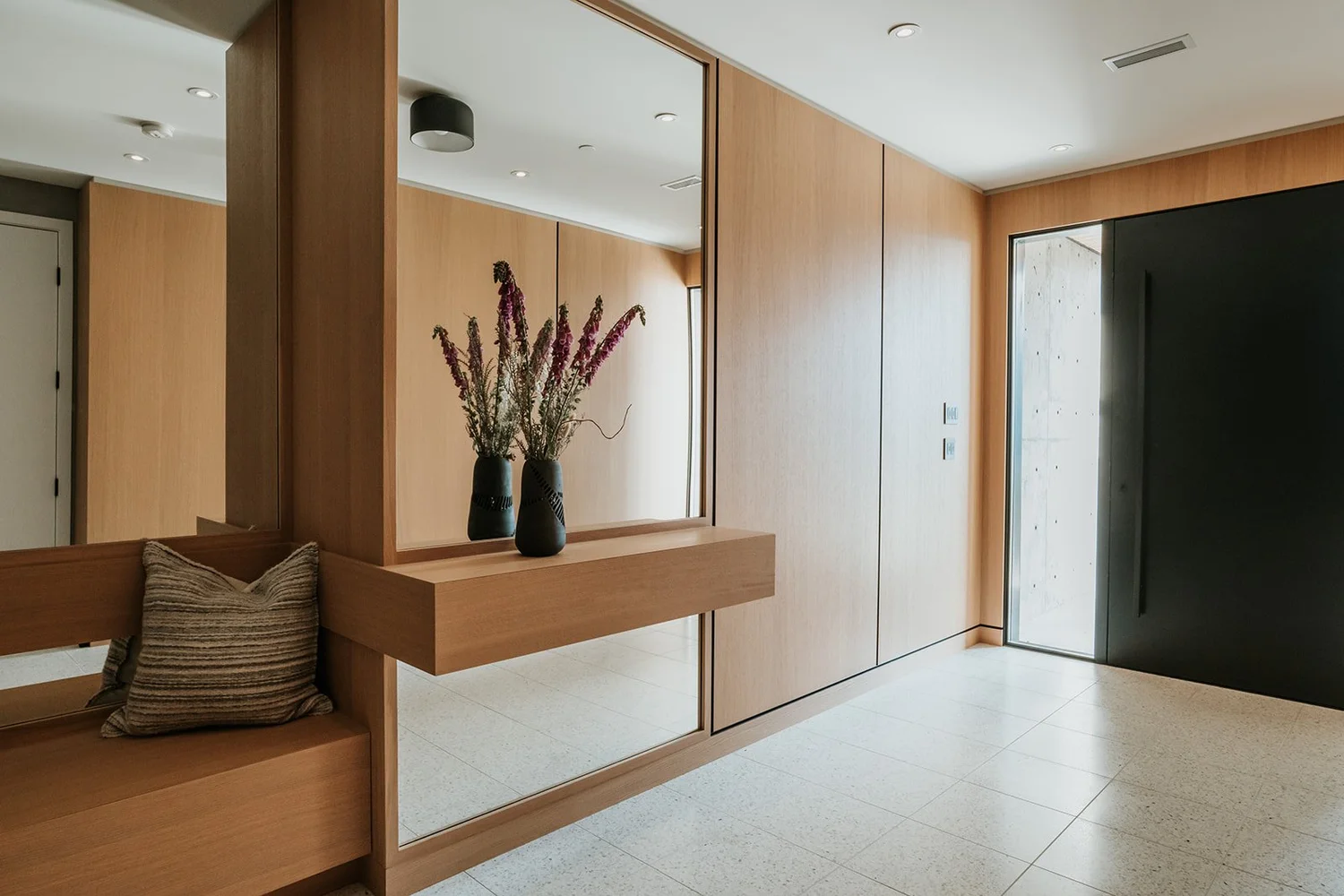
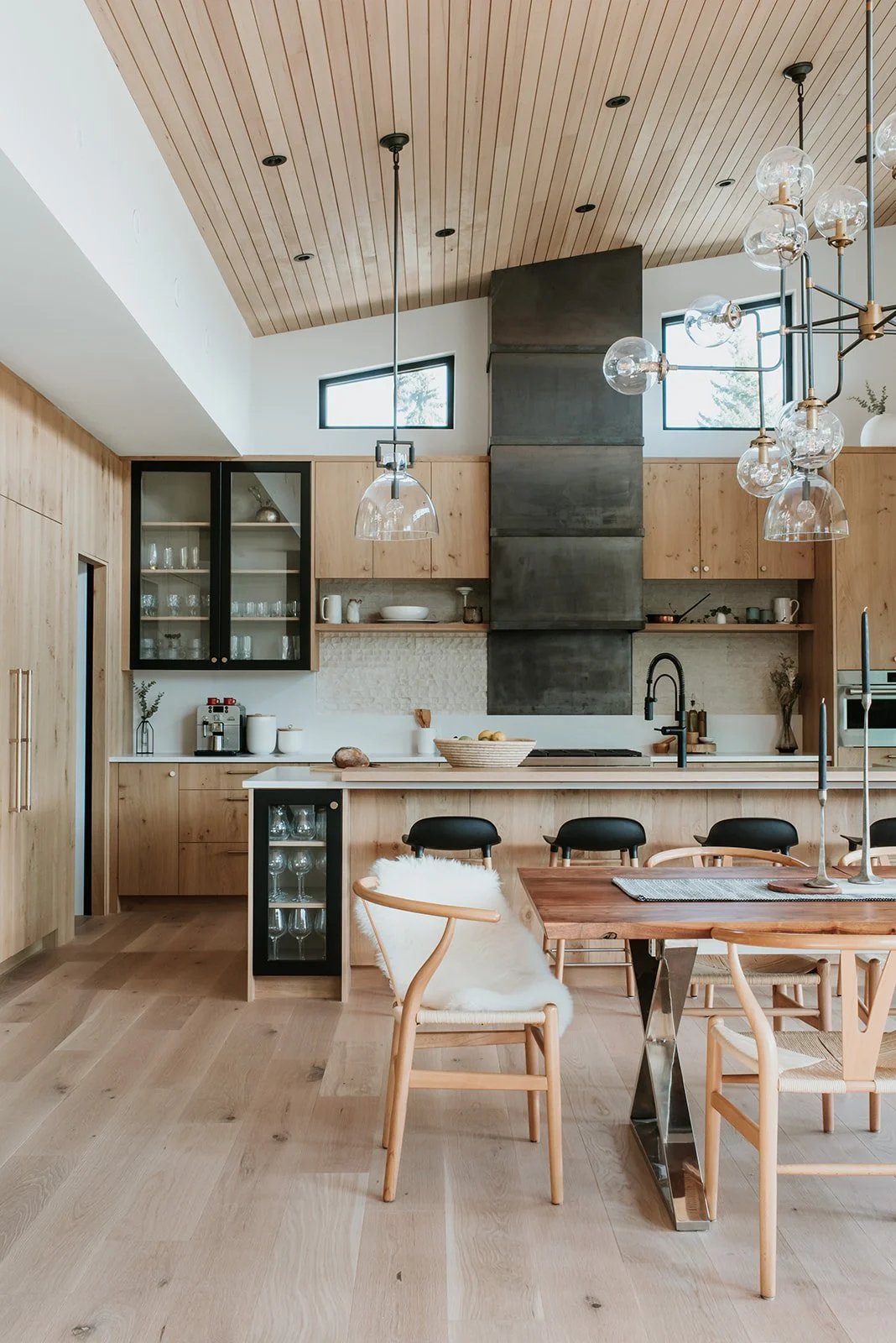
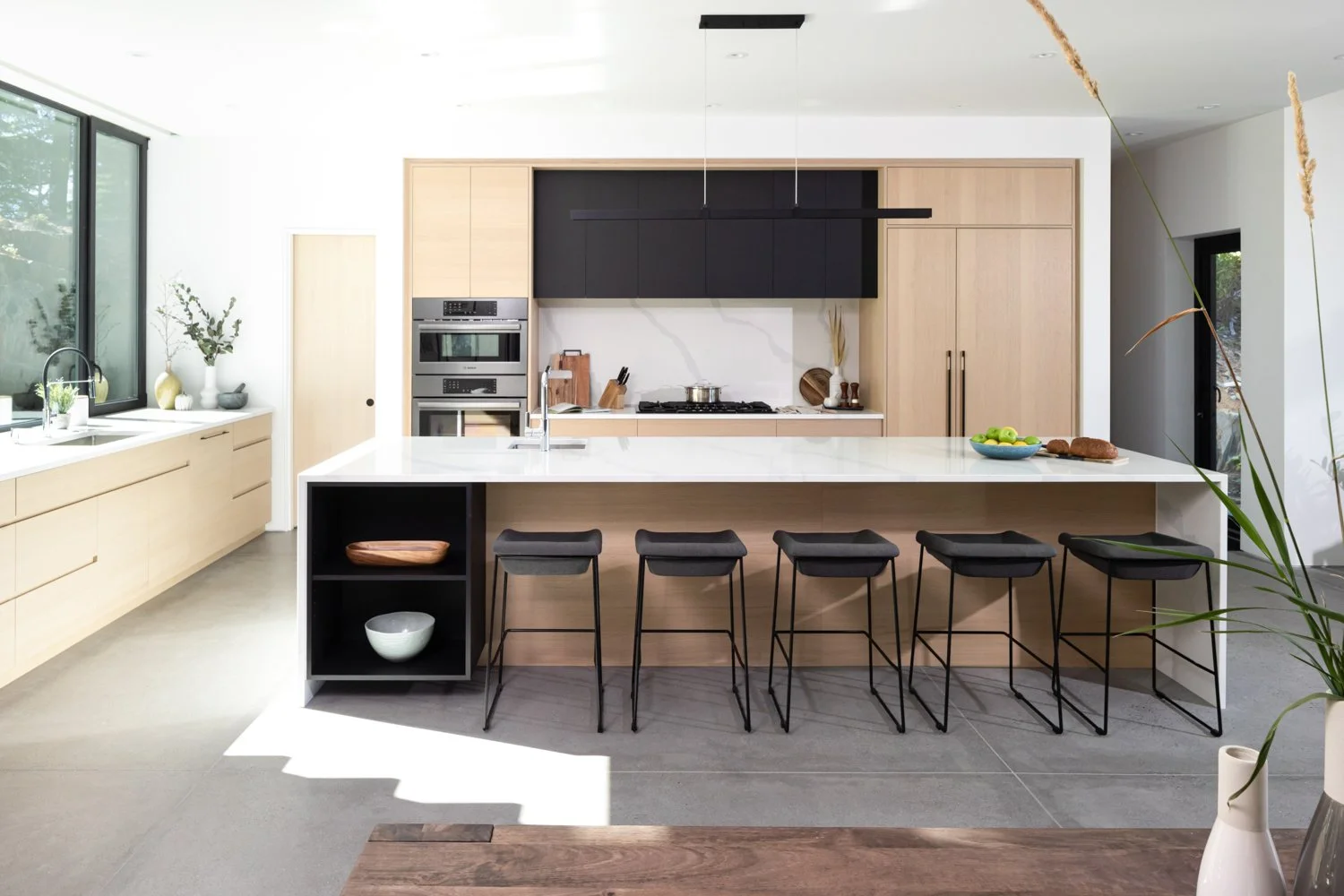
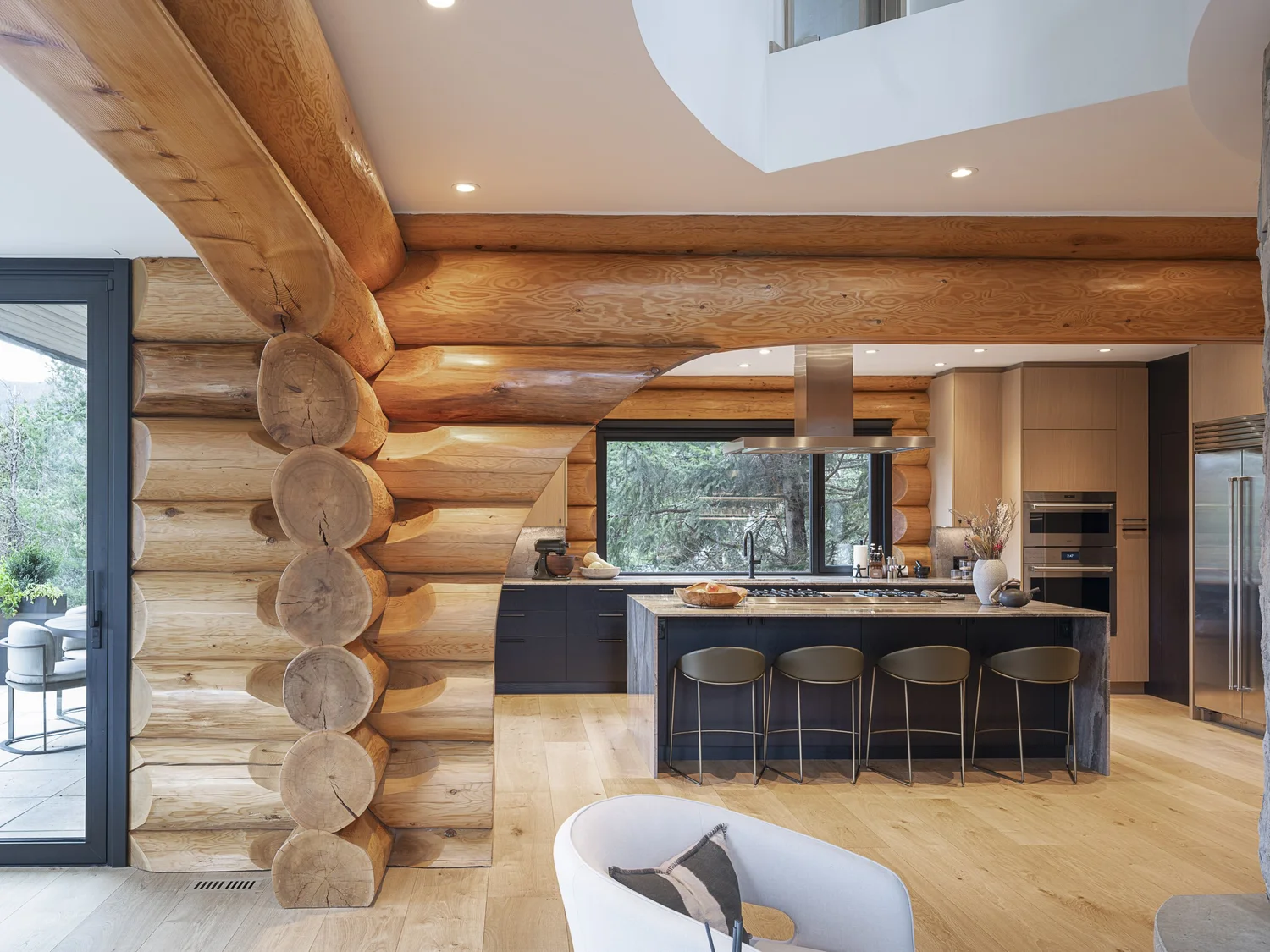
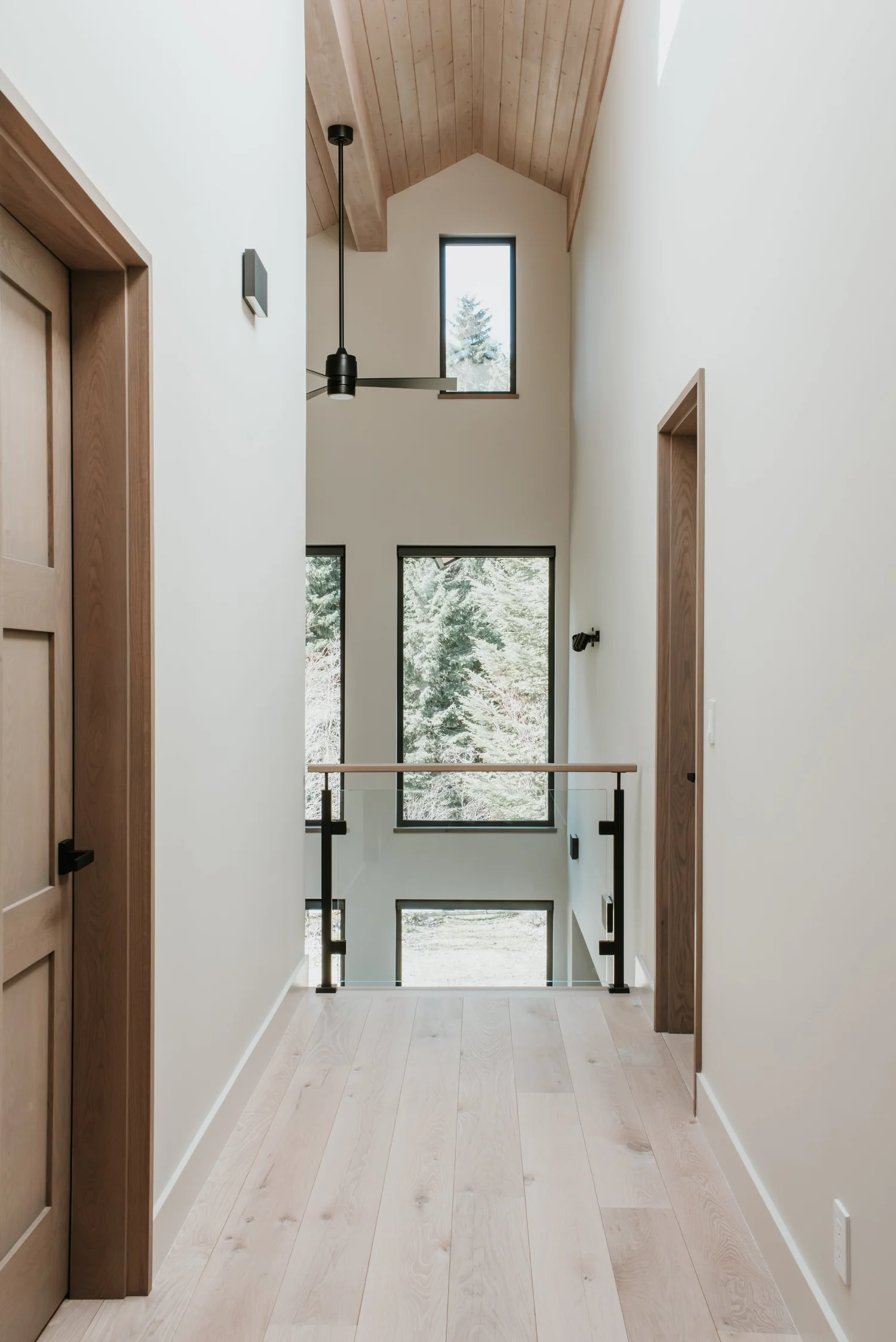
Material intelligence over visual noise. The palette does the talking. Antique oak, honed stone, lime-washed plaster, unlacquered brass, natural steel — these are the six materials we specify most.
Warm restraint, not cold minimalism. Warm earth tones — wheat, caramel, dusty sage, burnt umber — replace the cool grays that dominated the 2010s. Grey reads cold against winter mountain light; warm palettes glow.
Sculptural, organic architecture. Curved staircases, rounded islands, arched openings — shapes borrowed from the landscape itself. Sunridge has the curved staircase; Sunstone has the asymmetrical fluted fireplace.
Hand-finished over machine-perfect. Hand-troweled plaster. Unlacquered brass that will patina. Antique oak with board variation. The goal is a surface that reveals use, not one that hides it.
Invisible smart tech. Lighting, audio, climate — all there, none of it visible. The house feels calm because the devices don't announce themselves.
Three micro-climates in one corridor
The Sea-to-Sky corridor is not one design context. Squamish is ocean, granite, and the Stawamus Chief — palettes lean cooler, textures rougher, light harder. Whistler is deep forest and alpine — we lean into cedar soffits, warm interior glow, snow-load pragmatism. Pemberton is open valley and agricultural light — softer palettes, longer sightlines, materials that read from across a field. The same "Mountain Modern" brief produces three very different homes across thirty kilometres of highway.
How we got here
The studio is based in Squamish and led by Lauren Ritz — a Registered Interior Designer (RID), NCIDQ-certified, IDIBC-registered. The Sunstone kitchen in Pemberton won the 2026 Western Living Design 25 in the Mountain Modern category — the award is the reference point for what we think the aesthetic should actually look like.
Work that shows the thinking.
Common questions.
Is "Mountain Modern" just rustic modern rebranded?
Does Mountain Modern work in a smaller home?
What makes your take on Mountain Modern different?
Do I need an architect if I hire LRD Studio?
Let’s talk about how your family lives.
Every project starts with a conversation about who you are and how you actually live.