Sustainability in interior design is not a sticker you apply at the end. It is a set of specifying decisions made at the very beginning — which cabinetry gets built locally, which timber is FSC-certified, which paint is zero-VOC, which fixture can be serviced for twenty years instead of replaced in five. In the Sea-to-Sky, where Passive House standards are becoming the baseline for new residential construction, the interior designer's job is to make sure the furnishings, finishes, and lighting plan don't undo what the envelope was built to achieve.
What a sustainable interior actually looks like
Low- and zero-VOC finishes (paint, stains, adhesives). FSC-certified timber, or reclaimed where provenance is documented. Natural stone sourced within a few hundred kilometres. Wool, linen, and hemp textiles instead of synthetics. Hardware that can be serviced, not replaced. Lighting that meets the performance standard without over-specifying wattage. The room looks the same. The impact is not.
Passive House interiors — the details that matter
Passive House performance lives or dies at the detail. We coordinate closely with the architect and mechanical designer on three places where interiors and envelope meet: window reveals (depth, shading, light penetration), mechanical integration (HRV returns, thermostats, placement that stays quiet), and millwork that respects the thermal plane. A kitchen hood that exhausts to outside undermines a Passive House envelope — we specify recirculating or make-up-air systems that keep the envelope intact.
Where we partner on Passive House work
In the Sea-to-Sky, STARK Architecture (Squamish) is the leading Passive House practice we collaborate with. For retrofits and energy-upgrade renovations, we also work with builders focused on envelope performance. If you are working with a Passive House architect already, we can coordinate with their HRV and thermal details from the first interior decision.
The 2026 PNW material palette, examined for sustainability
Many of the materials we already specify for Mountain Modern work are sustainable by default: antique oak with real provenance, local granite and honed basalt, lime-washed plaster, unlacquered brass that patinas rather than fails. The PNW material stack and the sustainability brief are aligned more often than they conflict — the hard part is specifying honestly and documenting the chain of custody.
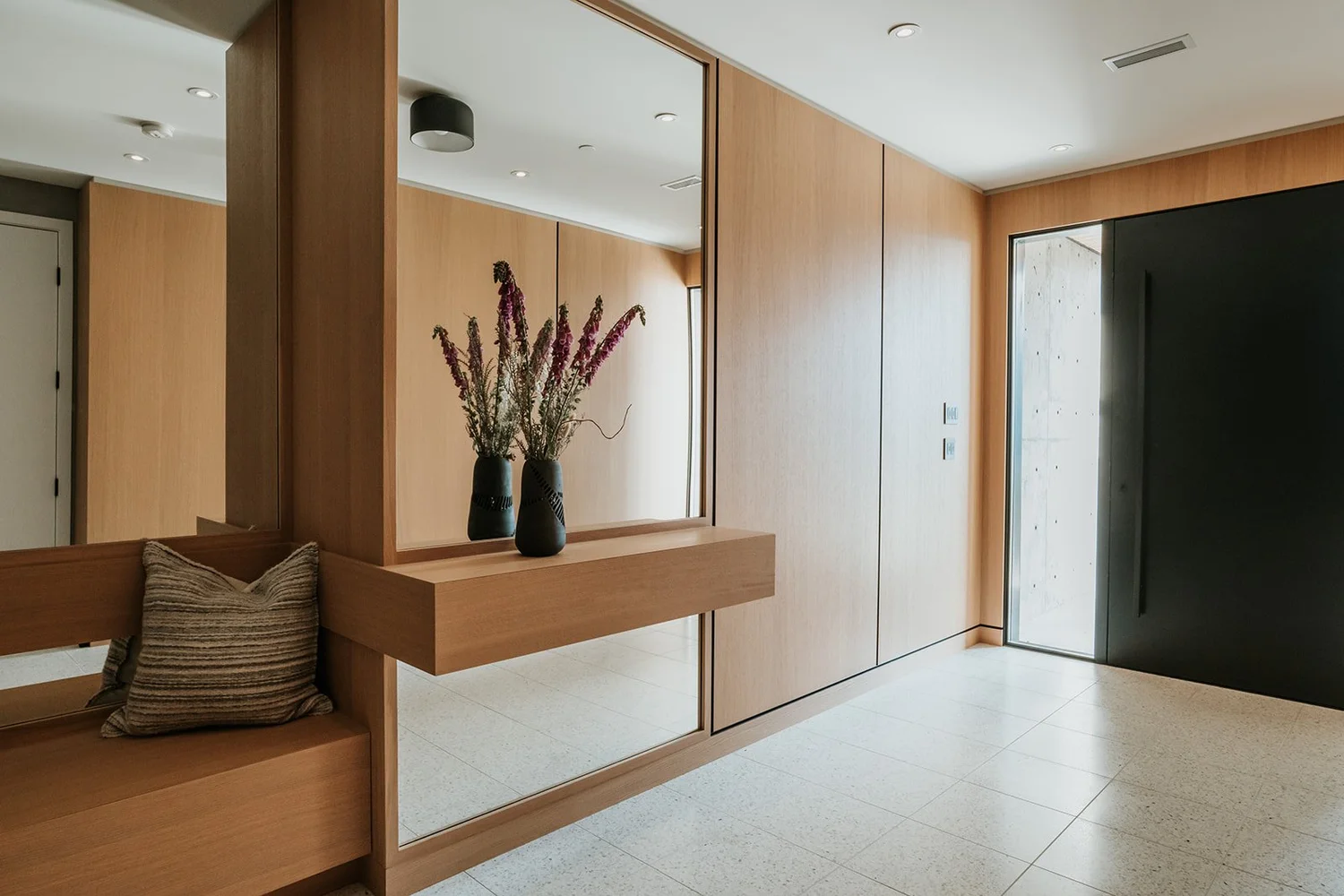
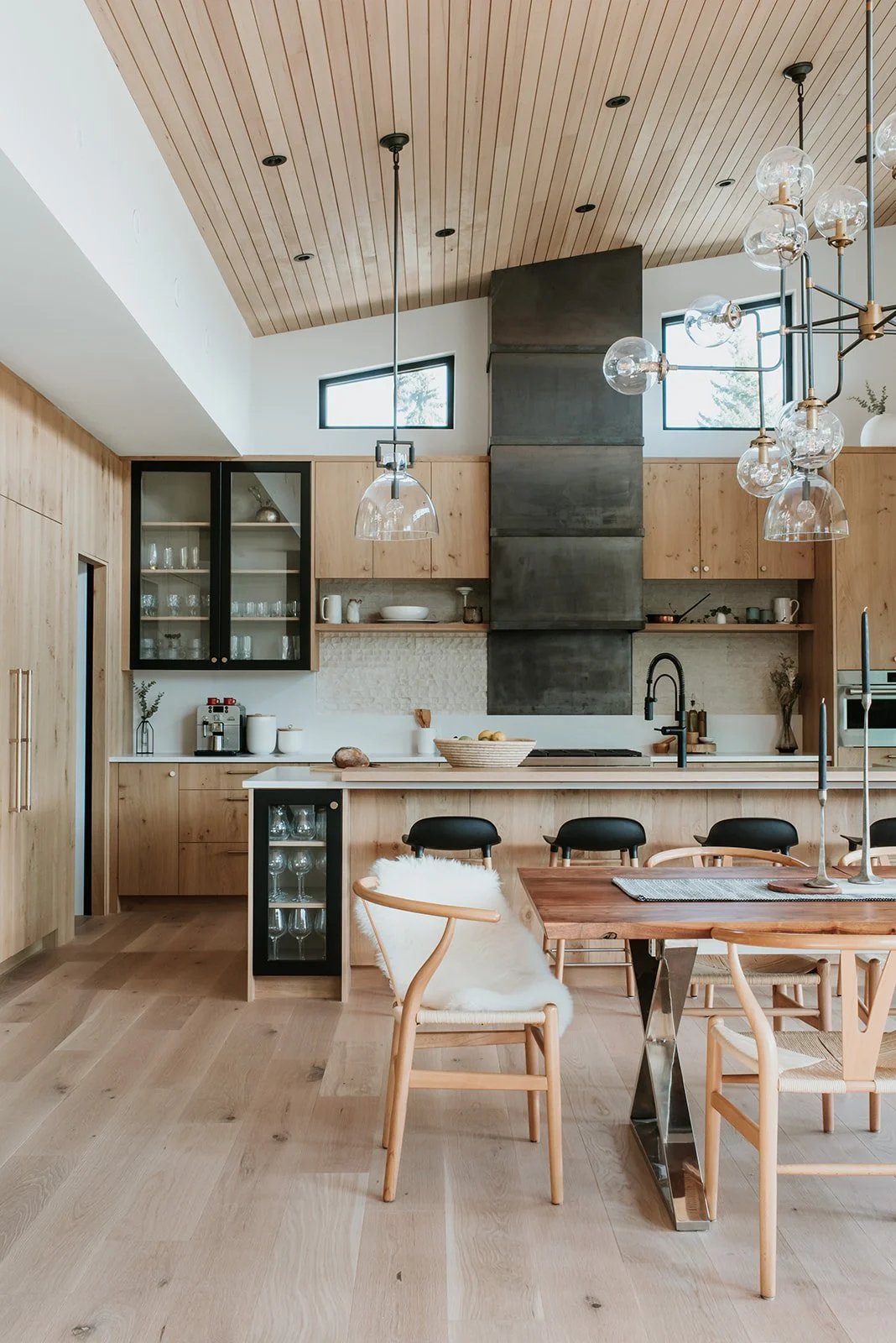
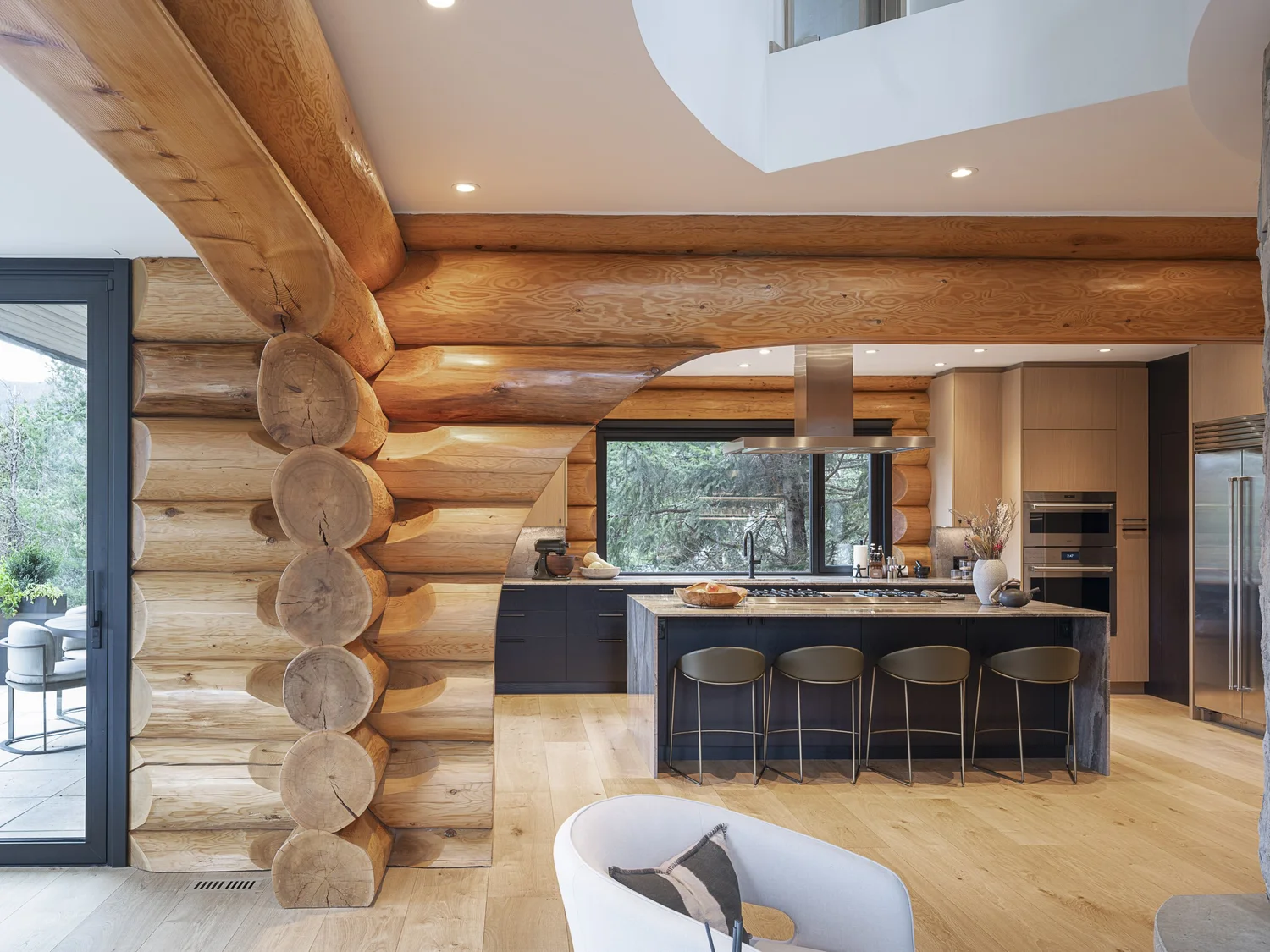
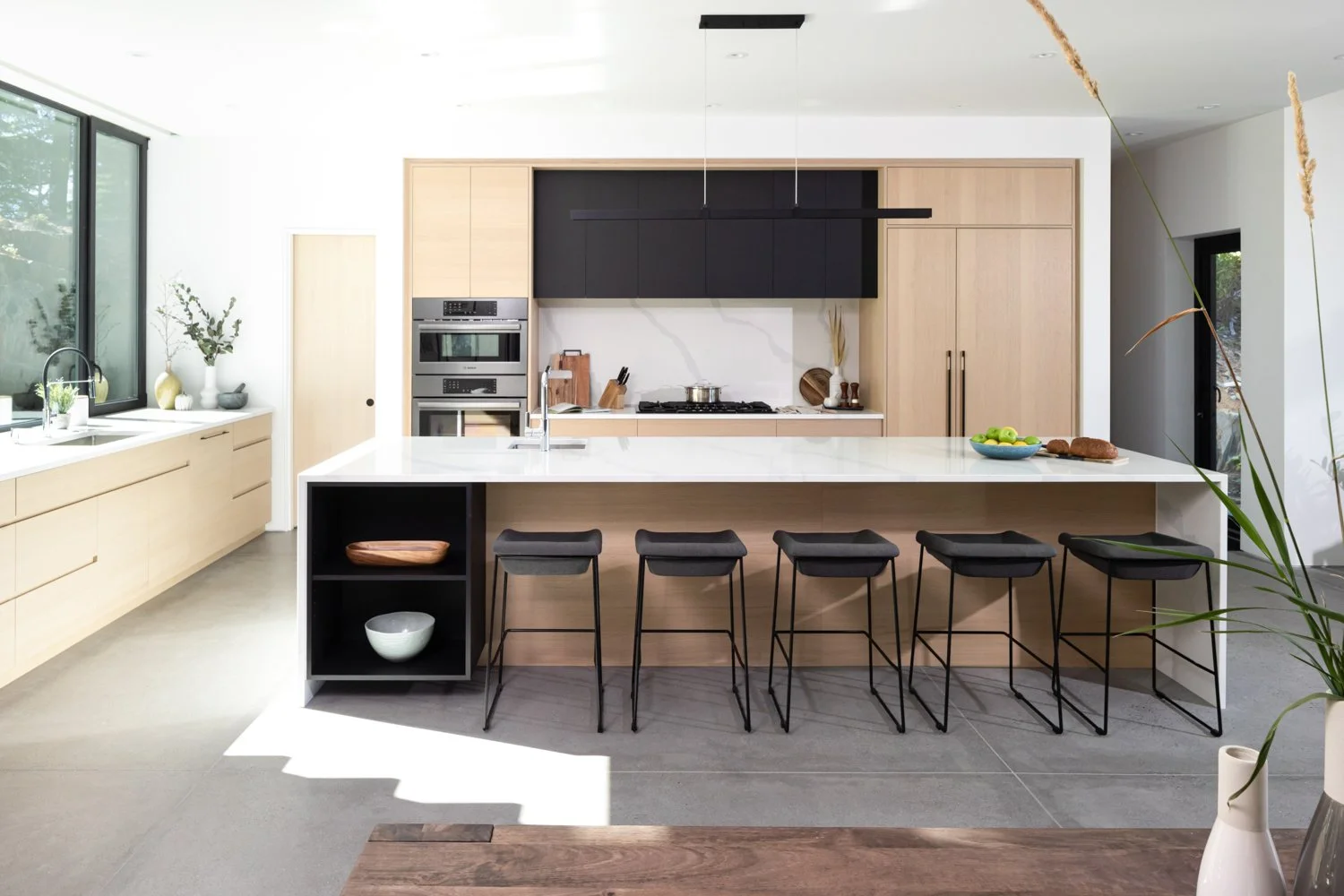
Work that shows the thinking.
Common questions.
Do you design certified Passive House homes?
Is sustainable design more expensive?
Can you help us choose non-toxic finishes for a nursery or sensitive-occupant home?
What's the most impactful sustainability decision you make on a project?
Let’s talk about how your family lives.
Every project starts with a conversation about who you are and how you actually live.